ENT Specialists
Patient Resources
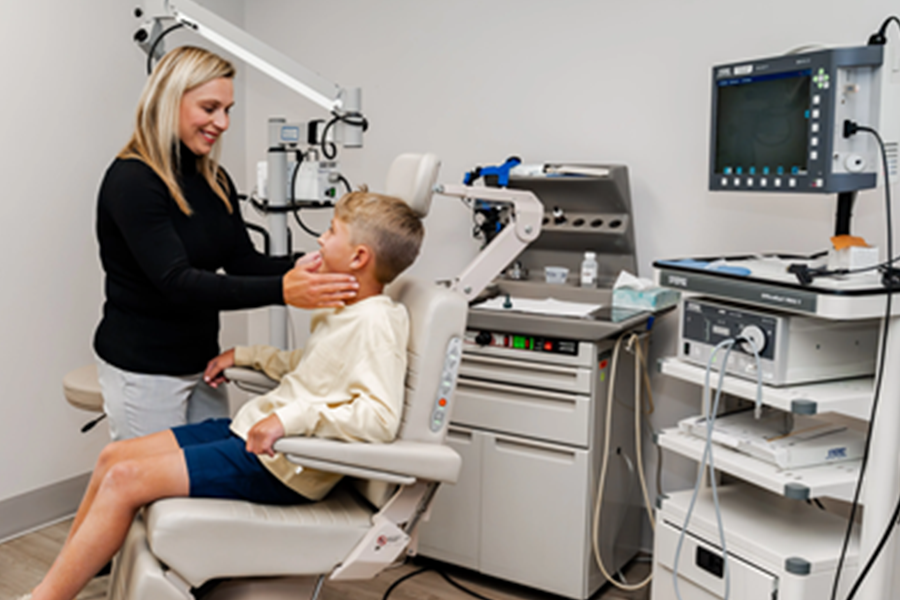
We are dedicated to providing personalized, compassionate care for patients of all ages. By listening, educating, and supporting each individual, we create a comfortable experience that helps patients feel informed, confident, and cared for throughout their healthcare journey. Please click on the topic below to learn more.
Allergies
Allergies are a common health issue. Our specialists offer medical and surgical options (or a combination of the two) to our patients, and can customize treatment according to each individual’s needs and condition.
Initial Evaluation
The initial evaluation will include a thorough review of all symptoms and potential triggering factors, a detailed medical history, and a comprehensive head and neck exam. ENT surgeons are well-trained in performing endoscopy, which gives an detailed view of the problem area. Combining traditional examination techniques with magnified endoscopic viewing of the intranasal and sinus cavities allows for a better understanding of a patient’s disease.
Common allergy symptoms include sneezing, runny eyes, itchy eyes, anterior and posterior nasal drip/discharge, congestion, dark circles under the eyes, fluctuating hearing loss, diminished or lost sense of smell, headaches, sinus pressure, sore throat, cough, and hoarseness, just to name a few. Many patients who have chronic, recurrent sinus and ear infections oftentimes have some component of allergic disease at play.
After the examination, additional diagnostic testing may be recommended. For patients who cannot undergo skin testing (young age, non-favorable skin conditions, history of severe allergic reaction during skin testing, etc.), a blood draw may be used instead to check for allergies.
Treatment Options
Allergy treatment focuses on helping patients manage symptoms and feel better by reducing their exposure to allergens, and using medications or other therapies. Common treatments include antihistamines, decongestants, and corticosteroids, which can relieve symptoms like sneezing, itching, and congestion. In some cases, doctors may recommend allergy shots (immunotherapy) to help the body build resistance to specific allergens over time, providing longer-lasting relief.
We also offer sublingual allergy drops. Instead of a shot in the arm once per week, this therapy involves patients applying a drop of allergen extract under the tongue several times a day at home.
Avoiding known triggers, such as certain foods, pets, or pollen, is also essential for effective allergy management. With a personalized approach, allergy treatments can help individuals live more comfortably and reduce the impact of allergies on daily life.
Balance
What causes dizziness and balance problems?
The inner ear plays a crucial role in maintaining equilibrium. Conditions such as vertigo, Meniere’s disease, vestibular neuritis, or benign paroxysmal positional vertigo (BPPV) often originate from problems within the ear’s balance system.
The brain depends on three systems in your body to maintain your balance and keep you upright. The inner ear contains a hearing organ and a balance organ. The balance portion is a tiny motion detector that senses movement as well as gravity. Any time you move, your ears know which way you moved, how fast you moved, when you started, and when you stopped. All of this information is then sent to the brain.
The eyes also contribute. You have to be able to see clearly. Your eyes also help your brain distinguish vertical from horizontal. And, your eyes must be able to make very quick, controlled movements in order to keep up with moving objects in your environment.
Somatosensation and proprioception refer to your body’s sense of space. This encompasses your weight distribution, gravity, and the muscle tension from all of your joints.
Your brain needs input from the inner ear, the eyes, and your somatosensory system in order to stay balanced. However, these three systems also have to communicate among themselves, and they must be in agreement when they send signals to the brain. If any one system becomes weak or impaired, the brain struggles to interpret the resulting signal, leading to the feeling of dizziness or off-balance.
Balance Tests
Sensory Organization Performance (SOP)
The SOP test is a functional test of your balance. You will be asked to remove your shoes, and complete a short series of balance tasks. Some involve closing your eyes, marching in place, or standing on a piece of thick foam. The audiologist looks for patterns of sway or instability that help distinguish the cause of your balance problem, as well as the effect it may be having on your everyday activities.
Videonystagmography (VNG)
Often considered the “gold standard” of balance testing, VNG assesses the eyes and the ears. If an inner ear problem is found, VNG can usually isolate which ear is the culprit. It also helps screen for other primary causes of dizziness that may be related to the brain or neurologic function. You will wear a special pair of goggles that are equipped with video cameras, and the audiologist will monitor your eye movement throughout the evaluation.
Once the balance testing is completed, the audiologist is usually able to discuss the results right away. Some test findings require more in-depth analysis, and you may have to discuss them during your follow up visit with the otolaryngologist.
Head and Neck Disorders
Our team can help treat the following head and neck disorders that may be affecting your health and wellness:
- Allergy Evaluation and Treatment
- Chronic/Recurrent Sinusitis
- Evaluation of Cough and Breathing Problems
- Evaluation of Swallow – In-Office Endoscopic Evaluation
- Evaluation of Suspicious Skin Lesions of the Head and Face (including Ears, Lips, Eyes and Nose) – Plastic Surgical Removal and Reconstruction
- Evaluation of Voice Changes/Hoarseness
- Nasal Obstruction
- Nasal Polyps
- Neck Masses or Swelling – Evaluation and Management
- Oral lesions – Evaluation and Removal
- Parathyroid Masses and Elevated Calcium Levels
- Septal Deviation
- Thyroid Goiter
- Thyroid Nodules
Hearing
Hearing loss can happen at any age, not necessarily “old age.” There are numerous causes of hearing loss. Treatment for permanent hearing loss is typically through the use of hearing aids. Loss of hearing removes our connection to those around us and isolates us. Hearing gives us safety and security, communication with our world and improved quality of life. Hearing loss can lead to withdrawal from social settings, stress from struggling to hear conversations, and overall decreased satisfaction of life.
Hearing Loss
If you answer “yes” to any of the following question, you may have hearing loss, and should make an appointment with one of our audiologists to see about restoring your hearing.
- Do you find it difficult to follow a conversation in a crowded room or restaurant?
- Do you frequently ask people, especially women or children, to speak up or repeat themselves?
- Do you find yourself turning one ear toward a speaker to hear better?
- Do you find it difficult to hear when speaking on the phone?
- Do you turn up the volume of the TV louder than others need?
- Do you find it necessary to sit up front in church or an auditorium to hear?
Hearing Aids
Hearing aids are tools that significantly improve the quality of life for individuals with hearing loss. They amplify sounds, making it easier to understand speech and stay engaged in conversations, which is vital for maintaining social connections and emotional well-being.
Types of Hearing Aids
There are two basic styles of hearing aids available on the market: behind-the-ear (BTE) and in-the-ear (ITE) models. Within these two groups, the receiver-in-the-ear (RITE) style is the most popular and most versatile. The RITE fits a wide degree of hearing loss and provides the most background noise reduction. This style also has a rechargeable battery version, eliminating the need to change a small battery every few days. When it comes to ITE models, the smaller the hearing aid, the smaller the parts including the battery size. Also, the smaller the hearing aid, the less power it will have to correct the hearing loss. Your audiologist will help explain which options may be best for your unique situation.
Cost and Lifespan
A hearing aid typically lasts four to six years. However, with good care, your hearing aids may last longer. Depending on the style of hearing aid chosen, we offer either a 4 or 5 year warranty, which is significantly longer than the industry-standard 2 year warranty.
Costs vary depending on technology and insurance benefits. There are also financial assistance programs available for those who qualify, and in some cases may pay entirely for hearing aids. Our audiologists will work with you on a hearing plan that works within your lifestyle and budget and meets your needs.
Pediatric Care
Whatever is ailing your child, whether it’s a runny nose, allergies, or something more severe, our doctors and medical providers are prepared and equipped to diagnose and treat their illness.
Comprehensive Care
We diagnose and treat ailments, illnesses and symptoms in accordance with the highest standards of pediatric medicine. Our doctors are board-certified otolaryngologists, meaning they meet the highest standards of the profession in practice, training and experience. We can diagnose and treat whatever ails your child, including:
- Allergy testing
- Allergy therapy, including allergy injections or sublingual (non-shot) therapy
- Breathing disorders
- Chronic sore throat
- Ear infections or ear drainage
- Enlarged tonsils and adenoids
- Hearing testing for infants and children
- Nasal obstruction
- Nasal stuffiness
- Neck masses or swelling
- Pediatric sleep studies
- Removal of foreign bodies: ear, nose, or throat
- Snoring
- Speech delay
- Swallowing disorders
- Tongue tie
Nasal and Sinus Disorders
A Comprehensive Approach
Using a combination of physical examination, endoscopic procedures, and occasionally imaging studies (CT or MRI), we strive to fully understand the nature and cause of each patient’s nasal and sinus ailments. We offer medical and surgical options when appropriate, and work with our patients to develop a collaborative plan that is safe and effective.
Sinus Procedures
Some patients may require a procedural intervention to address their conditions. We offer a number of surgical treatment options, including the possibility of an in-office procedure. We have a state-of-the-art surgical suite that includes image-guidance technology to ensure the highest quality of care is being delivered. Patients who undergo in-office procedures are often given a mild sedative to help them relax, and the surgeons use a combination of topical and local anesthetics to make each patient comfortable. With in-office procedures, there is no need for general anesthesia, and it is generally more cost-effective than traditional surgeries in hospitals or surgical centers.
What Is Balloon Sinuplasty?
Balloon sinuplasty (BSP) is a procedure for chronic sinusitis patients who are not responding well to medications and are seeking relief from uncomfortable and painful sinusitis symptoms.
With balloon sinuplasty, ENT surgeons open inflamed sinuses the same way heart surgeons open up blocked arteries during balloon angioplasty. The procedure is less invasive than traditional sinus surgery, and effective at relieving symptoms of chronic sinusitis.
Sleep Disorders
Sleep apnea can lead to hypertension, poor control of diabetes, and an increased risk of stroke and heart attack. Snoring is indicative of what may be a serious and potentially deadly cardiovascular risk factor. As a person snores, multiple breath-holding episodes occur. Oxygen levels repeatedly drop to dangerous levels. Snoring, constant fatigue, a need or desire to take naps, and frequently falling asleep during the day should all be taken seriously, as they may indicate problems that need to be addressed.
Sleep Studies
An overnight sleep study allows us to evaluate your symptoms. We can also perform tests to help identify whether you have a sleep disorder, and if so, how best to treat it.
We evaluate many sleep disorders, including:
- Hypersomnia and daytime sleepiness
- Insomnia
- Obstructive Sleep Apnea
- Periodic Limb Movements
- Restless Legs Syndrome
- Snoring in children